Resources

Client Alerts, News Articles, Blog Posts, & Multimedia

Everything you need to know about BMD and the industry.

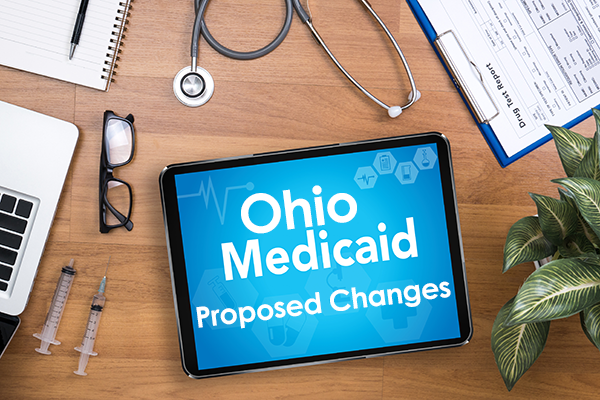
Ohio Department of Medicaid Proposes Changes to Dental Reimbursement and Coverage Rule

Client Alert

The Ohio Department of Medicaid is proposing amendments to Ohio Administrative Code rule 5160-5-01 to do all of the following:

  • Procedure Code Updates
    • Update covered services based on new procedure codes added to the 2024 American Dental Association Code on Dental Procedures and Nomenclature.
  • Frequency Limitations and Coverage Clarifications
    • Amend frequency limitations, coverage clarifications, and service descriptions for: Dental exams, Prophylaxis, Imaging, Pin retention, Re-cementing, Re-bonding, Orthodontic treatments, Biopsy, Application of fluoride varnish.
  • Imaging Payments
    • Allow reimbursement for multiple bitewings taken in conjunction with a panoramic image.
  • Vaccine Administration
    • Discontinue payment for the administration of COVID-19 and human papillomavirus vaccines.
  • Pin Retention
    • Reimburse pin retention per tooth, with a maximum of three pins per tooth.
  • Re-cementing and Re-bonding Crowns
    • Remove the frequency limit for re-cementing and re-bonding crowns.
  • Orthodontic Treatment Payments
    • Ensure payment for comprehensive orthodontic treatment (D8080) covers the initial placement visit and the first quarter of treatment.
    • Allows seven calendar quarters of periodic orthodontic treatment visits (D8670) per course of treatment.
    • Prohibits reimbursement for D8670 in the same quarter as D8080.
  • Partial Dentures
    • Removes the restriction stating "A partial denture with a resin base may be covered only for a patient younger than 19".
  • Dental Evaluations and Prophylaxis
    • Clarifies that periodic dental evaluations and dental prophylaxis are covered once per 180 days for several special groups, including but not limited to:
      • Pregnant women
      • Foster children
      • Employed individuals with disabilities, regardless of age
    • Prior Authorization (PA) Requirements
      • The PA Required column will indicate when procedures are paid by report.
      • Prohibits reimbursement for excisional biopsies of salivary glands in conjunction with another biopsy on the same date of service.
    • Topical Fluoride Varnish Application
      • Adds the Current Procedural Terminology code for "Application of topical fluoride varnish by a physician or other qualified health care professional when performed in a nondental clinic or facility setting".

There will be a hearing on these proposed rule changes August 12, 2024. Please contact BMD Healthcare Member Daphne Kackloudis at dlkackloudis@bmdllc.com for questions or to help you prepare comments on the rules.


Tax Savings Potentially on the Chopping Block under President Biden’s American Jobs Plan and American Families Plan

Recently, President Biden has proposed several tax law changes in his American Jobs Plan and American Families Plan. Outlined below, are a few of the tax savings that could be significantly changed or eliminated under Biden’s plans.

Here are the Final Candidates for Mayor of Cleveland

Earlier this year, current Cleveland Mayor, Frank Jackson, announced he would not run for re-election this fall. With no need to beat an incumbent, the Cleveland mayoral race suddenly became competitive. Thirteen individuals declared their intent to run for mayor. The City of Cleveland, however, has a difficult qualification requirement to run: 3,000 valid signatures from Cleveland residents. The deadline to file a petition to run, with the 3,000 valid signatures, had to be submitted by June 16 (yesterday).

What Happens to a Pandemic Stimulus Payment Upon Death?

On January 1, 2021, the federal government issued stimulus payments (also known as Economic Impact Payments) to American citizens – on paper. However, many of the stimulus payments were not received until several months later. Sometimes the stimulus payments did not arrive until after an individual died.

The Masks Are Back: New OSHA Regulations for Healthcare Employers

Employment Law After Hours is back with a News Break Episode. Yesterday, OSHA published new rules for healthcare facilities, including hospitals, home health employers, nursing homes, ambulance companies, and assisted living facilities. These new rules are very cumbersome, requiring mask wearing for all employees, even those that are vaccinated. The only exception is for fully vaccinated employees (2 weeks post final dose) who are in a "well-defined" area where there is no reasonable expectation that any person with suspected or confirmed COVID-19 will be present.

New OSHA Guidance for Workplaces Not Covered by the Healthcare Emergency Temporary Standard

On June 10, 2021, OSHA issued an Emergency Temporary Standard (ETS) for occupational exposure to COVID-19, but it applies only to healthcare and healthcare support service workers. For a detailed summary of the ETS applicable to the healthcare industry, please visit https://youtu.be/vPyXmKwOzsk. All employers not subject to the ETS should review OSHA’s contemporaneously released, updated Guidance on Mitigating and Preventing the Spread of COVID-19 in the Workplace. The new Guidance essentially leaves intact OSHA’s earlier guidance, but only for unvaccinated and otherwise at-risk workers (“at-risk” meaning vaccinated or unvaccinated workers with immunocompromising conditions). For fully vaccinated workers, OSHA defers to CDC Guidance for Fully Vaccinated People, which advises that most fully vaccinated people can resume activities without wearing masks or physically distancing, except where required by federal, state, or local laws or individual business policies.