Resources

Client Alerts, News Articles, Blog Posts, & Multimedia

Everything you need to know about BMD and the industry.

Your Golden Chance for H-1B Lottery Registration - March 2026

Client Alert
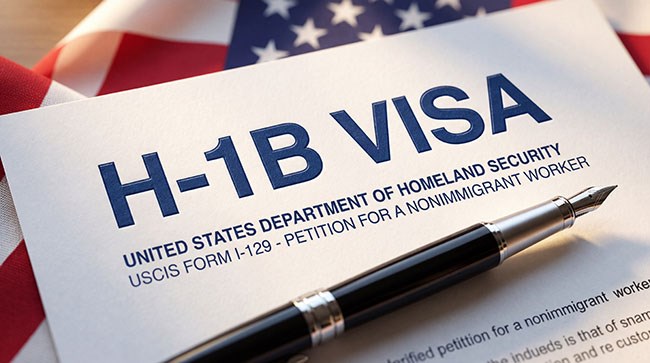
U.S. Citizenship and Immigration Services (USCIS) will open initial H-1B registration at noon Eastern time on March 4, 2026, and will remain open through March 19, 2026.

$100,000 Fee Not Applicable to Change of Status H-1B Petitions:

If you already reside in the U.S. in a valid nonimmigrant status (F-1, F-2, H-4, J-1, O-1, O-2, TN, etc.), and your employer files an H-1B change of status petition, you will not be subject to the proposed $100,000 fee. This fee is intended to discourage certain overseas registrations/filings and is cost-prohibitive for employers to sponsor workers who do not reside in the U.S.

Further, the new H-1B rule of implementing a weighted selection process will generally favor the allocation of H-1B visas to higher-skilled and higher-paid employees, while maintaining the opportunity for employers to secure H-1B workers at all wage levels. This rule benefits physicians, engineers, and other skilled workers paid in Wage Levels 3 or 4 by increasing their chances of being selected in the H-1B lottery, in addition to advanced U.S. degree selections.

Why This is Significant for U.S.-Based Foreign Nonimmigrants:

If you are currently in the U.S. on F-1 OPT/STEM OPT or another valid nonimmigrant status, this year may offer:

  • Reduced financial barriers for employers sponsoring you.
  • Potentially higher selection probability (especially if you qualify for advanced degree or higher wage levels).

In short, if you legally reside in the U.S., this year is your golden chance of being selected in the H-1B lottery.

If you wish to submit employee names in the H-1B lottery, please contact BMD Member Duriya Dhinojwala at dd@bmdllc.com to discuss your options.  


January 2025 Notice of Proposed Rulemaking Brings Notable Changes to HIPAA Security Rule

In January 2025, the U.S. Department of Health and Human Services proposed amendments to the HIPAA Security Rule, aiming to enhance cybersecurity for covered entities (CEs) and business associates (BAs). Key changes include mandatory compliance audits, workforce training, vulnerability scans, and risk assessments. Comments on the proposed rule are due by March 7, 2025.

Corporate Transparency Act Effective Again

The federal judiciary has issued multiple rulings on the enforceability of the Corporate Transparency Act (CTA), which took effect on January 1, 2024. Previously, enforcement was halted nationwide due to litigation in Smith v. U.S. Department of the Treasury. However, on February 18th, the court lifted the stay, reinstating the CTA’s reporting requirements. Non-exempt entities now have until March 21, 2025, to comply. Businesses should act promptly to avoid civil penalties of $591 per day and potential criminal liability.

Status Update: Physician Noncompete Agreements in Ohio

Noncompete agreements remain enforceable in Ohio if they meet specific legal requirements. While the AMA and FTC have challenged these restrictions, courts continue to uphold reasonable noncompete provisions for physicians. Recent cases, like MetroHealth System v. Khandelwal, highlight how courts may modify overly restrictive agreements to balance employer interests with patient care. With ongoing legal challenges to the FTC’s proposed ban, Ohio physicians should consult a healthcare attorney before signing or challenging a noncompete agreement.

Immigration Orders and Their Economic Impact on Small Business: Insights from Attorney and Former Immigration Judge Rob Ratliff

President Trump's recent executive orders, targeting immigration policies, could significantly impact small businesses in Ohio, particularly those owned by undocumented immigrants. With stricter visa vetting, halted refugee admissions, and potential deportations, these businesses face uncertainty, workforce disruption, and closures. Ohio's immigrant-owned businesses, especially in food services and transportation, contribute billions to the state economy, and any disruption could result in economic ripple effects.

Corporate Transparency Act Ruling from the U.S. Supreme Court

The U.S. Supreme Court recently ruled on the enforceability of the Corporate Transparency Act (CTA), lifting an injunction previously imposed by the Fifth Circuit. However, a separate nationwide injunction remains in effect, meaning businesses are still not required to comply with the CTA’s reporting requirements. FinCEN continues to accept voluntary reporting while enforcement remains paused.