Resources

Client Alerts, News Articles, Blog Posts, & Multimedia

Everything you need to know about BMD and the industry.

Your Golden Chance for H-1B Lottery Registration - March 2026

Client Alert
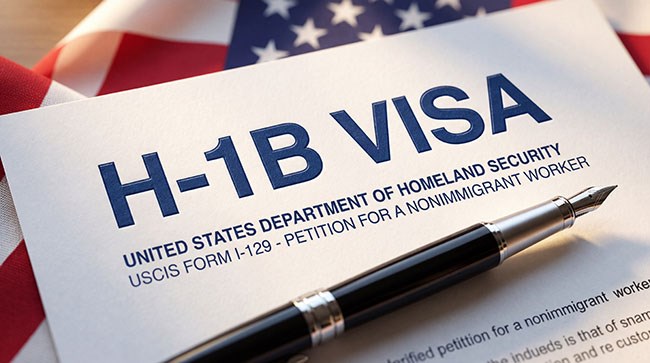
U.S. Citizenship and Immigration Services (USCIS) will open initial H-1B registration at noon Eastern time on March 4, 2026, and will remain open through March 19, 2026.

$100,000 Fee Not Applicable to Change of Status H-1B Petitions:

If you already reside in the U.S. in a valid nonimmigrant status (F-1, F-2, H-4, J-1, O-1, O-2, TN, etc.), and your employer files an H-1B change of status petition, you will not be subject to the proposed $100,000 fee. This fee is intended to discourage certain overseas registrations/filings and is cost-prohibitive for employers to sponsor workers who do not reside in the U.S.

Further, the new H-1B rule of implementing a weighted selection process will generally favor the allocation of H-1B visas to higher-skilled and higher-paid employees, while maintaining the opportunity for employers to secure H-1B workers at all wage levels. This rule benefits physicians, engineers, and other skilled workers paid in Wage Levels 3 or 4 by increasing their chances of being selected in the H-1B lottery, in addition to advanced U.S. degree selections.

Why This is Significant for U.S.-Based Foreign Nonimmigrants:

If you are currently in the U.S. on F-1 OPT/STEM OPT or another valid nonimmigrant status, this year may offer:

  • Reduced financial barriers for employers sponsoring you.
  • Potentially higher selection probability (especially if you qualify for advanced degree or higher wage levels).

In short, if you legally reside in the U.S., this year is your golden chance of being selected in the H-1B lottery.

If you wish to submit employee names in the H-1B lottery, please contact BMD Member Duriya Dhinojwala at dd@bmdllc.com to discuss your options.  


First-of-Its-Kind Federal Ruling Finds Use of Consumer AI Tool May Destroy Attorney-Client Privilege

On February 10, 2026, Judge Jed Rakoff of the U.S. District Court for the Southern District of New York issued a first-of-its-kind ruling finding that documents generated by a criminal defendant using a consumer AI platform were not protected by attorney-client privilege after being shared with counsel. The court treated the AI tool as a third party, concluding that entering sensitive information into a publicly available platform may waive confidentiality. The ruling also suggests that the work product doctrine may not apply where AI-generated materials are created independently by a client rather than at counsel’s direction. The decision signals that parties should exercise caution when using consumer AI tools in connection with legal matters.

Invisible Algorithms: The Hidden Role of Artificial Intelligence in USCIS Immigration Processing

The Department of Homeland Security has confirmed that artificial intelligence and machine learning tools are now integrated into numerous operational functions within U.S. Citizenship and Immigration Services (USCIS). These tools are described as mechanisms to improve efficiency, reduce backlogs, and assist officers in managing an unprecedented volume of applications. DHS emphasizes that human adjudicators retain decision-making authority and that AI systems do not independently grant or deny immigration benefits. Find out how AI affects the U.S. immigration process.

OAAPN | Year In Review: 2026 Ohio Board of Nursing and Ohio Law Rules

Find out key changes to Ohio law and the Ohio Board of Nursing rules that have directly impacted APRN practice over the past year, including Psychiatric Inpatient Documents, Intimate Examinations, Signature Authority, Duties Related to Fetal Death, Retail IV Therapy Clinics, Release from Permanent Restrictions, Disciplinary Action, Course on Drugs and Prescriptive Authority, Overdose Reversal Drugs, Office Based Opioid Treatment, Withdrawal Management for Substance Use Disorder, Safe Haven Program, and more.

Ohio House Bill 537: Proposed Regulations for Midwives and Birthing Centers

House Bill 537, introduced in the Ohio House of Representatives, proposes a comprehensive regulatory framework for certified nurse-midwives, certified midwives, licensed midwives, and traditional midwives. The legislation would clarify scope of practice, establish licensure standards, and impose new requirements for freestanding birthing centers and home births. Healthcare providers and facilities should be aware of the proposed changes and their potential operational impact.

Proposed Health Information Privacy Reform Act Expands Protections Beyond HIPAA

The Health Information Privacy Reform Act (HIPRA) seeks to extend privacy protections to health data not covered under HIPAA, including data collected by apps and wearables. HIPRA introduces broader definitions of protected health information, strengthens privacy and security requirements, establishes patient notification rights, and sets national de-identification standards. Companies processing health data should monitor developments to ensure compliance.