Resources

Client Alerts, News Articles, Blog Posts, & Multimedia

Everything you need to know about BMD and the industry.

Your Golden Chance for H-1B Lottery Registration - March 2026

Client Alert
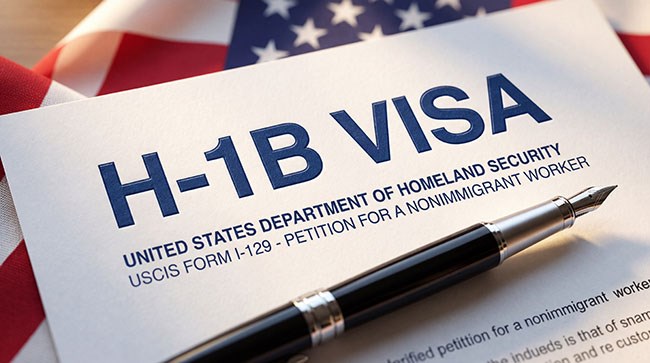
U.S. Citizenship and Immigration Services (USCIS) will open initial H-1B registration at noon Eastern time on March 4, 2026, and will remain open through March 19, 2026.

$100,000 Fee Not Applicable to Change of Status H-1B Petitions:

If you already reside in the U.S. in a valid nonimmigrant status (F-1, F-2, H-4, J-1, O-1, O-2, TN, etc.), and your employer files an H-1B change of status petition, you will not be subject to the proposed $100,000 fee. This fee is intended to discourage certain overseas registrations/filings and is cost-prohibitive for employers to sponsor workers who do not reside in the U.S.

Further, the new H-1B rule of implementing a weighted selection process will generally favor the allocation of H-1B visas to higher-skilled and higher-paid employees, while maintaining the opportunity for employers to secure H-1B workers at all wage levels. This rule benefits physicians, engineers, and other skilled workers paid in Wage Levels 3 or 4 by increasing their chances of being selected in the H-1B lottery, in addition to advanced U.S. degree selections.

Why This is Significant for U.S.-Based Foreign Nonimmigrants:

If you are currently in the U.S. on F-1 OPT/STEM OPT or another valid nonimmigrant status, this year may offer:

  • Reduced financial barriers for employers sponsoring you.
  • Potentially higher selection probability (especially if you qualify for advanced degree or higher wage levels).

In short, if you legally reside in the U.S., this year is your golden chance of being selected in the H-1B lottery.

If you wish to submit employee names in the H-1B lottery, please contact BMD Member Duriya Dhinojwala at dd@bmdllc.com to discuss your options.  


Ohio Board of Pharmacy Update: Key Regulatory Changes and Proposals You Need to Know

The Ohio Board of Pharmacy (BOP) has rescinded certain OAC rules (OAC 4729:5-18-01 through 4729:5-18-06), removing regulations on office-based opioid treatment (OBOT) clinics. The rescissions took effect on June 3, 2024. The BOP also published a new rule, OAC 4729:8-5-01, which sets explicit reporting guidelines for licensed dispensaries and became effective on June 7, 2024.

LGBTQIA+ Patients and Discrimination in Healthcare

In early April, the Kaiser Family Foundation released a study outlining the challenges that LGBT adults face in the United States related to healthcare. According to the study, LGBT patients are “twice as likely as non-LGBT adults to report negative experiences while receiving health care in the last three years, including being treated unfairly or with disrespect (33% v. 15%) or having at least one of several other negative experiences with a provider (61% v. 31%), including a provider assuming something about them without asking, suggesting they were personally to blame for a health problem, ignoring a direct request or question, or refusing to prescribe needed pain medication.”

Ohio Recovery Housing Overhaul: New Standards and Certification Requirements Reshape Sober Living Spaces

Ensuring Fair Access: SB 269 Protects Affordable Medication for Low-Income Patients

SB 269, introduced on December 19, 2023, will ensure that 340B covered entities, including Federally Qualified Health Centers, Ryan White Clinics, disproportionate share hospitals, and Title X clinics, can acquire 340B drugs without facing undue restrictions or discriminatory practices from drug manufacturers and distributors. This protection is crucial for 340B covered entities to continue to provide affordable medications and comprehensive services to low-income patients.

Unveiling Ohio's Pharmacy Board Updates for Distributors, Mobile Clinics, and Controlled Substances

The Ohio Board of Pharmacy will hold a public hearing on May 28, 2024, to discuss several proposed changes and additions to Ohio Administrative Code (OAC). These changes pertain to terminal distributors of dangerous drugs (TDDDs), mobile clinics or medication units, and the classification of controlled substances.