Understanding the Proposed H-1B Filing Fee Changes and the Impact on Workforce Planning
Client AlertOn August 25, 2026, the Trump administration published a proposed rule to impose another $103,265 payment clause on any new H-1B visa “cap-subject” petitions. The Department of Homeland Security (DHS) and U.S. Citizenship and Immigration Services (USCIS) have given agencies a 30-day period to comment.
If implemented: Which Employers will be Affected by the $103,265 payment?
- New H-1B Cap Subject Petitions for Overseas Beneficiaries: Affected.
- New H-1B Cap Subject Petitions for Beneficiaries within the U.S., i.e. “change of status” petitions including OPT/F-1 to H-1B petitions: Affected.
- OPT to H-1B New Cap Subject Petition: Affected.
- All future H-1B lottery petitions: Affected.
Who will Not Be Affected by the $103,265 payment?
- Current H-1B visa holders with the Same Employer: Not Affected. Cap Exempt valid visas and approved petitions may remain unaffected.
- H-1B Future Extensions and Renewals with the Same Employer: Not Affected.
- H-1B Portability/Change of Employer: Not clear guidance. If “cap exempt” Not Affected.
- “Cap-Exempt H-1B New Petitions” related to Universities, Hospitals or Non-Profits: Not Affected.
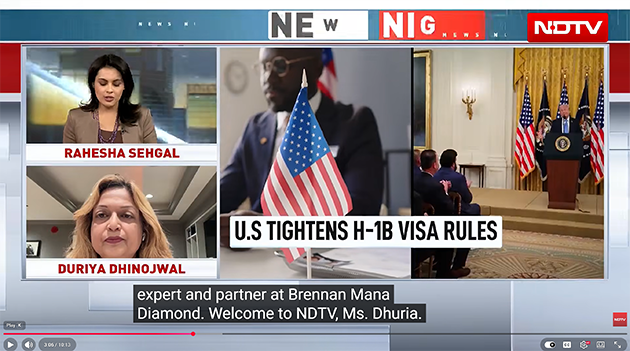
You can watch BMD Immigration Member Duriya Dhinojwala's interview with NDTV, which is India’s most watched T.V. channel, on YouTube here. She discusses the impact on the future of the H-1B visas if this fee is not stayed by the federal courts. The interview starts at the 3-minute mark.
Contact Duriya Dhinojwala with additional questions and information on this proposed ruling at ddhinojwala@bmdllc.com or 330.253.5790.