Resources

Client Alerts, News Articles, Blog Posts, & Multimedia

Everything you need to know about BMD and the industry.

Your Golden Chance for H-1B Lottery Registration - March 2026

Client Alert
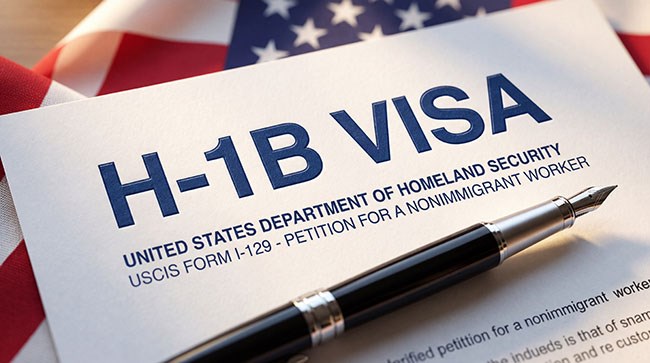
U.S. Citizenship and Immigration Services (USCIS) will open initial H-1B registration at noon Eastern time on March 4, 2026, and will remain open through March 19, 2026.

$100,000 Fee Not Applicable to Change of Status H-1B Petitions:

If you already reside in the U.S. in a valid nonimmigrant status (F-1, F-2, H-4, J-1, O-1, O-2, TN, etc.), and your employer files an H-1B change of status petition, you will not be subject to the proposed $100,000 fee. This fee is intended to discourage certain overseas registrations/filings and is cost-prohibitive for employers to sponsor workers who do not reside in the U.S.

Further, the new H-1B rule of implementing a weighted selection process will generally favor the allocation of H-1B visas to higher-skilled and higher-paid employees, while maintaining the opportunity for employers to secure H-1B workers at all wage levels. This rule benefits physicians, engineers, and other skilled workers paid in Wage Levels 3 or 4 by increasing their chances of being selected in the H-1B lottery, in addition to advanced U.S. degree selections.

Why This is Significant for U.S.-Based Foreign Nonimmigrants:

If you are currently in the U.S. on F-1 OPT/STEM OPT or another valid nonimmigrant status, this year may offer:

  • Reduced financial barriers for employers sponsoring you.
  • Potentially higher selection probability (especially if you qualify for advanced degree or higher wage levels).

In short, if you legally reside in the U.S., this year is your golden chance of being selected in the H-1B lottery.

If you wish to submit employee names in the H-1B lottery, please contact BMD Member Duriya Dhinojwala at dd@bmdllc.com to discuss your options.  


Multi-340B Contract Pharmacy Locations on the Brink? The Third Circuit’s Ruling Gives a Hint.

The 340B drug discount program requires pharmaceutical manufacturers to offer to sell their products at significant discounts to safety net providers called “covered entities.” In 1996, the Health Resources and Services Administration (HRSA) issued guidance authorizing covered entities to enter into a contract pharmacy arrangement with a single third-party contract pharmacy, to which the manufacturer would ship 340B medications but bill the covered entity. In 2010, HRSA issued revised guidance permitting covered entities to enter into an unlimited number of contract pharmacy arrangements.

Five Opportunities for Operations and Compliance Excellence in 2023

With the holidays behind us and the rest of the year ahead, now is the perfect time to get your operational/compliance house in order! Though your list might be a mile (or an inch) long, here are five places to start.

The Pregnant Workers Fairness Act - What Employers Need to Know

Effective June 27, 2023, the Pregnant Workers Fairness Act (PWFA) will require employers with at least 15 employees to provide reasonable accommodations for qualified employees with pregnancy-related restrictions unless doing so would impose an undue hardship on the employer.

Valley National Bank/Trulieve Loan: A Big Step Out of the Shadows

In a late December press release, Trulieve announced that it had secured a $71.5 million commercial bank loan. In addition to the amount of the loan, which may be the largest commercial bank loan to date to a cannabis company, the release prominently identified Valley Bank and featured both a quote from Valley’s Senior Vice President, John Myers, and a description of the Bank’s service platform and commitment to the cannabis industry.

The End of Non-Competes? The Impact It Will Have on the Healthcare Industry

On January 5, 2023, the Federal Trade Commission (“FTC”) announced a proposed rule that, if enacted, will ban employers from entering into non-compete clauses with workers (the “Rule”), and the Rule would void existing non-compete agreements. In their Notice, the FTC stated that if the Rule were to go into effect, they estimate the overall earnings of employees in the United States could increase by $250 billion to $296 billion per year. The Rule would also require employers to rescind non-competes that they had already entered into with their workers. For purposes of the Rule, the FTC has defined “worker” to also include any employees, interns, volunteers, and contractors.”